Shutting Off Your Water Fast When a Pipe Breaks
Find your main water valve today, so you can close it in seconds when a pipe bursts.
Go to the valve finding stepsLicensed plumbers who work in Missoula
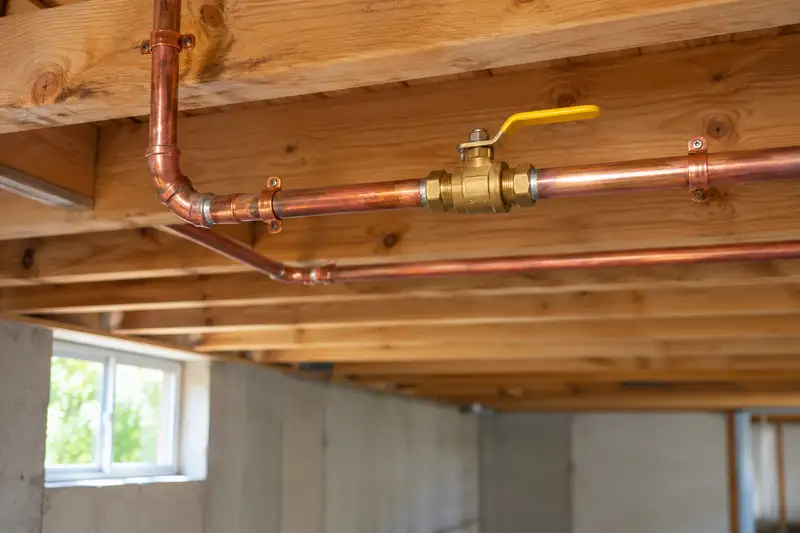
Where the main valve usually hides
Shutting off your water fast is the single most useful plumbing skill in a house. A burst pipe can release several gallons a minute, and the main valve stops all of it at once.
The main valve sits at the point where the supply pipe comes through the foundation. In Missoula homes with a basement, check near the floor on the street side. In homes with a crawl space, it may be just inside the crawl space access or in a utility room on the ground floor.
If you cannot find it inside, the shutoff may be outside in a meter box near the street, where your water line begins. That valve usually belongs to the utility and may need a special key, so it is best to find the inside valve now, before you need it.
The two kinds of main valve
Most homes have one of two types. Each one closes in its own way.
Gate valve with a round handle
Spin the wheel clockwise to its stop, which can take quite a few turns. Older gate valves can stick, so use steady hand pressure rather than a wrench.
Ball valve with a lever
Swing the lever ninety degrees. When it lies crosswise to the pipe, the valve is closed.
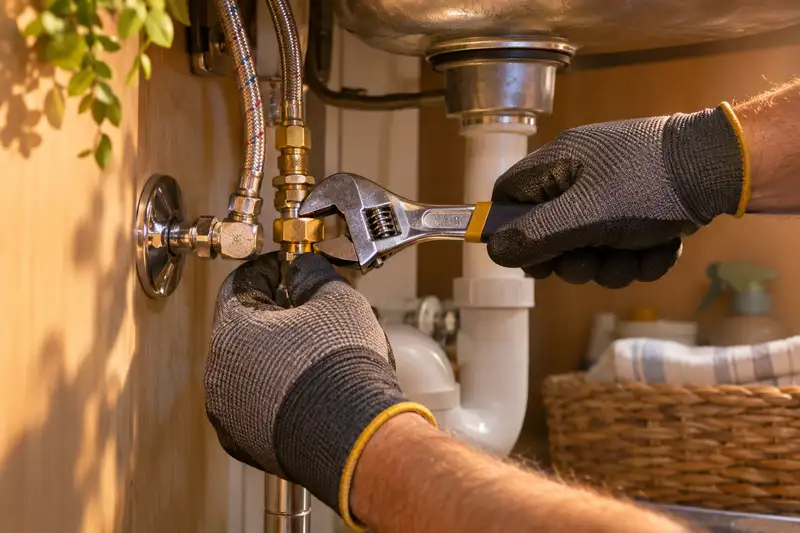
Shutting off your water, step by step
Close the main valve
Spin a round wheel clockwise to its stop, or swing a lever ninety degrees so it lies crosswise.
Open a faucet on the lowest floor
The lines empty out there, which takes the pressure off the leak.
Turn off the water heater
For a long shutoff, flip the breaker on an electric tank or turn a gas tank down to pilot.
Check that the water is off
Open a faucet upstairs. If water still flows after a minute, the valve has not closed fully.
Main valve stuck or leaking?
Do not force it. Call and a licensed plumber in Missoula can come out to shut off the water and repair the valve.
Fixture valves stop one leak without shutting off the house
Most fixtures have their own small shutoff valves. Closing one stops the water to that fixture only, so the rest of the house keeps running water while you wait for a repair.
- Each toilet has a small valve low behind the bowl
- Sinks have two valves inside the cabinet below each faucet
- Washing machines have hot and cold valves behind the machine
- The water heater has a valve on the cold water pipe at the top of the tank
- Outside faucets often have a shutoff inside the house near where the pipe goes through the wall
When a valve will not turn
Valves that have not been turned in years often seize. Turning a stuck gate valve too hard can break the handle or the stem inside, and then the valve may not close at all.
Try gentle, steady pressure with your hand. If it will not move, do not use a wrench or a hammer. Close the next valve upstream instead, which for most fixtures means the main valve, and call.
If the main valve itself is stuck, a plumber can close the utility shutoff outside and fit a lever style ball valve that turns easily.
Make the main valve easy to use
A few minutes now makes a big difference on the day you need it.
- Clear boxes and shelves away from the valve so you can reach it quickly
- Hang a bright tag on it so nobody has to hunt for it
- Close and reopen it every year so it stays free
- Show everyone in the house how it closes
- Ask a plumber about replacing an old gate valve with a ball valve
Turning the water back on
Wait until the leak has been repaired. Then close the faucet you opened earlier and ease the main valve open over several seconds. Snapping it open sends a jolt through the pipes that can loosen fittings.
Let each faucet run briefly so trapped air escapes. Sputtering at first is normal and settles in a minute or two. Turn the water heater back on once water is flowing at the hot taps.
If you live in a condo or apartment
Units in a shared building often have their own shutoff valve, usually in a closet near the water heater, under the kitchen sink or behind an access panel in a bathroom. Some buildings only have a shutoff for the whole floor or the whole building.
Ask your building manager where your unit valve is before you need it. If you cannot find it in an emergency, close the fixture valves you can reach and contact the manager right away.
Signs your main valve needs replacing
An old main valve can fail exactly when you need it. These signs suggest it is time to have it replaced with a ball valve.
- The handle will not turn, or only turns part of the way
- Water keeps flowing after the valve is fully closed
- Water drips from the stem when the valve is turned
- Rust or green crust around the valve body
Practice before you need it
The best time to practice shutting off your water is on a calm afternoon, not during a leak. Walk to the main valve with everyone who lives in the house and show them how it closes.
Close it, check a faucet upstairs to make sure the water stops, then open it again slowly. If anything about the valve feels wrong, such as a stiff handle or a drip from the stem, have it looked at before winter.
Shutting off your water in a rental or a home you just bought
Moving into a house is the best moment to learn where everything is. Before the boxes are unpacked, find the main valve, try it once and note whether it is a wheel or a lever. Shutting off your water is far calmer when you already know the route to the valve in the dark.
Tenants should ask the landlord where the main valve sits and whether any fixture valves are known to stick. If the only shutoff is outside in a meter box, ask who is allowed to use it and keep that answer with your emergency numbers.
Questions about shutting off the water
- Which direction closes the main water valve?
- Can I use the shutoff in the meter box by the street?
- Why is water still coming out after I closed the main valve?
- How often should I test my main water valve?
- Should I close the main valve before a long trip?
- What if my house does not seem to have a main valve?
- Can I shut off the water feeding the water heater?
- What tools do I need to close the main valve?
- Should I shut off the water before going on vacation in winter?
- How do I know if the valve closed all the way?
Which direction closes the main water valve?
Spin a round wheel clockwise to its stop. Swing a lever until it lies crosswise to the pipe.
Can I use the shutoff in the meter box by the street?
That valve usually belongs to the water utility and may need a special key. Use the valve inside the house if you can, and contact the utility if you cannot.
Why is water still coming out after I closed the main valve?
The lines are still full. Run the lowest faucet in the house until they empty. If water keeps flowing for more than a few minutes, the valve may not be fully closed or may be worn.
How often should I test my main water valve?
Once a year is enough. Turn it off and back on to keep it from seizing.
Should I close the main valve before a long trip?
For anything longer than a long weekend, especially in winter, a closed main valve keeps a split pipe from flooding an empty house. Leave the heat on.
What if my house does not seem to have a main valve?
Some older homes have the only shutoff in the meter box near the street. In that case, a plumber can install a valve inside the house where the line enters.
Can I shut off the water feeding the water heater?
Yes, and for a long shutoff switch the heater itself off as well, so it is not heating a tank that is draining.
What tools do I need to close the main valve?
Usually you need none. Most valves turn by hand. Keep a flashlight nearby, because the valve is often in a dark corner of the basement or crawl space.
Should I shut off the water before going on vacation in winter?
For anything longer than a long weekend, yes, and the winter plumbing guide has more on leaving the house empty. Close the main valve, let the lowest faucet empty the lines and keep the heat at a steady setting.
How do I know if the valve closed all the way?
Open a faucet on an upper floor. If water stops flowing after the pipes drain, the valve is closed. A steady trickle that never stops means the valve is not sealing.
Shutoff valve trouble in Missoula
If a valve is stuck, leaking or missing, call. We can send a licensed Missoula plumber to repair or replace it.