Keep Pipes From Freezing This Winter, Room by Room
Knowing which pipes sit near the cold, and protecting them before winter, prevents most frozen pipes.
Find the pipes most at riskLicensed plumbers who work in Missoula
Where to start if you want to keep pipes from freezing
Protecting a house against frozen pipes starts with a walk around it. Pipes freeze where cold air reaches them, and those spots are not always the ones that feel cold to you.
Look for pipes along outside walls, in crawl spaces, in unheated basements, in attached garages and in any room built over an unheated space. Follow the line to each outside faucet as far as you can see it.
Make a note of each spot. These are the pipes to insulate in the fall and to watch on the coldest nights.
- Sink supply lines inside outside walls
- Pipes in crawl spaces and along the basement rim joist
- Pipes through attached garages
- Lines to outside faucets
- Bathrooms or kitchens over a garage or crawl space
How a pipe freezes and why it splits
Water expands by about a tenth of its volume as it turns to ice. Inside a pipe, the ice plug pushes against the water trapped between it and a closed faucet, and the pressure builds until the pipe gives way.
That is why opening a faucet on very cold nights helps. It relieves the pressure and keeps water moving, and moving water is much harder to freeze.
Water freezes at 32°F
That is the point where trouble starts. Pipes near outside walls can reach it while the room feels warm.
Why one open faucet helps
A thin stream from the faucet farthest from the main valve keeps water moving through the whole line.
Insulate and seal before winter
Most of this work is simple and can be done in an afternoon with supplies from any hardware store.
Fit foam pipe sleeves
Measure the pipe and buy sleeves to match. Cover every exposed run in crawl spaces, garages and unheated basements, and tape the seams.
Seal gaps around pipes
Fill the gaps where pipes pass through outside walls and the foundation with caulk or spray foam to stop cold drafts.
Seal the sill plate
Look along the top of the foundation wall for gaps where cold air comes in, and seal them.
Close crawl space vents
Vents in a crawl space let winter wind sweep across the pipes. Shut or cover them until spring.
Consider heat cable
For a pipe that freezes every year, a thermostatically controlled heat cable rated for pipes can help. Follow the maker’s instructions carefully.
Outside faucets need their own care
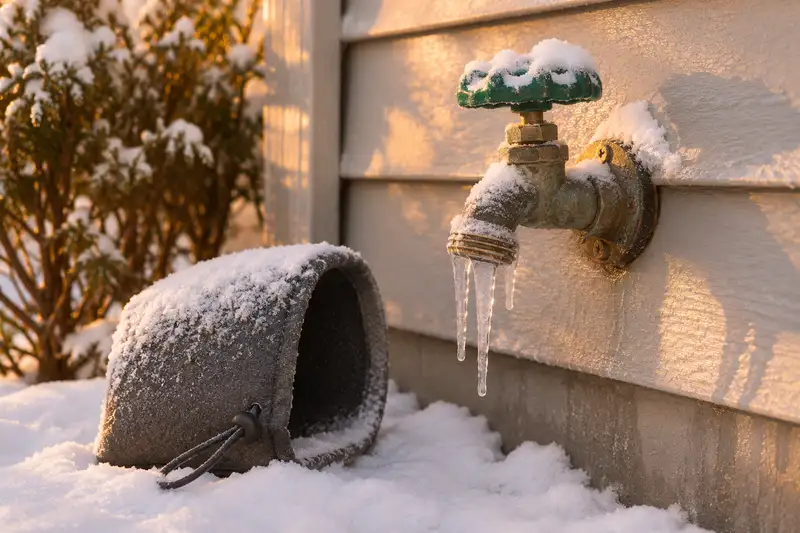
Outside faucets are among the most common frozen pipe spots, because the faucet sits outdoors and the pipe behind it runs through the wall.
Remove the hose
A connected hose traps water in the faucet. The pipe behind the wall can split even when the faucet looks fine, and a split there needs burst pipe repair.
Close the inside valve
Many homes have an indoor valve for each outside faucet. Shut it, then leave the outdoor faucet open so the line runs dry.
Add a cover
An insulated faucet cover adds a little protection, but it does not replace draining the line.
A pipe already frozen?
Open the faucet, warm the pipe gently and never use a flame. If it will not thaw, a licensed plumber in Missoula can come out.
Helpful habits, and habits that make freezing more likely
Avoid
- Turning the heat far down at night or while away
- Leaving the garage door open in cold weather
- Leaving garden hoses connected through the winter
- Closing off rooms with pipes in their outside walls
Do instead
- Keep the heat at a steady temperature day and night
- Open sink cabinets on outside walls when it is very cold
- Let one faucet trickle on the coldest nights
- Keep doors open between heated rooms and rooms with plumbing
If you are away during a cold spell
A house left empty in winter needs extra care. Hold the furnace at one steady setting, prop open the sink cabinets against exterior walls and arrange for a neighbor to look in every couple of days.
For a long trip, closing the main water valve and draining the lines by opening a faucet on the lowest floor lowers the risk a great deal. Our guide on shutting off your water fast shows where to find the main valve.
Signs a pipe is starting to freeze
Catching a freeze early makes it much easier to deal with.
- A tap that only coughs out a trickle on a cold morning
- Frost on the outside of a pipe
- A toilet that refills slowly after flushing
- Odd noises in the pipes when you open a faucet
If you notice any of these, open the faucet, warm the area gently and read our page on frozen pipe repair.
Pipes in garages and additions
Attached garages are one of the coldest parts of a house that still has plumbing. Laundry lines, utility sinks and pipes running to a bathroom above the garage all sit close to air that can drop well below freezing.
Keep the garage door closed in cold weather, insulate any exposed pipe and seal gaps where pipes pass from the garage into the house. If a room above the garage has a bathroom, keep that room warm and open its cabinet doors on cold nights.
Rooms added onto a house over the years can hide pipes in walls or floors that were once outside. If one room always gets cold, it is worth finding out which pipes run through it.
A quick plan for the coldest nights
When the forecast calls for a deep freeze, run through this short plan before bed.
- Set the thermostat to a steady temperature and leave it there overnight
- Prop open sink cabinets that back onto exterior walls
- Let a thin stream run from the faucet farthest from the main valve
- Close the garage door and any crawl space vents
- Make sure everyone knows where the main water valve is
Crawl spaces need extra attention
In homes with a crawl space, the pipes often run just inside the foundation wall, where cold air can reach them through vents, gaps and the ground itself. Insulating these pipes and closing the vents for winter makes the biggest difference.
If the crawl space has a door or hatch, make sure it closes firmly. A small gap can let in enough cold air to freeze a pipe overnight in a hard cold snap.
Questions about keeping pipes from freezing
- Does leaving a faucet dripping really stop pipes freezing?
- Which faucet should I leave running?
- Is foam pipe insulation enough on its own?
- Should I close the crawl space vents in winter?
- Can pipes freeze inside a heated house?
- How cold does it have to be for pipes to freeze?
- Can I use a space heater to keep pipes warm?
- Do I need to protect pipes in a heated basement?
- Should I insulate hot water pipes too?
Does leaving a faucet dripping really stop pipes freezing?
It helps. A thin stream relieves pressure in the line and keeps water moving, which makes freezing much less likely on the coldest nights.
Which faucet should I leave running?
The one farthest from where the water enters the house, or the one fed by the pipe most at risk, such as a sink on an outside wall.
Is foam pipe insulation enough on its own?
It slows heat loss but does not add heat. In very cold spots, combine it with sealing drafts and keeping the space as warm as you can.
Should I close the crawl space vents in winter?
In most homes, yes. Closing or covering them keeps cold air from blowing across the pipes. Open them again in spring to let the space dry out.
Can pipes freeze inside a heated house?
Yes. Pipes inside outside walls, under cabinets or above unheated spaces can freeze even when the rooms feel warm, because cold air reaches them through the wall or floor.
How cold does it have to be for pipes to freeze?
Pipes are most at risk when outside temperatures stay well below freezing for several hours, especially with wind. Exposed pipes in garages and crawl spaces can freeze sooner.
Can I use a space heater to keep pipes warm?
A space heater can help in a small area such as under a sink or in a utility room, provided it stands on a solid surface, well clear of anything flammable, while someone is in the house.
Do I need to protect pipes in a heated basement?
Usually less, but pipes along the rim joist at the top of the foundation wall can still get cold enough to freeze. Insulate those runs and seal any drafts.
Should I insulate hot water pipes too?
Yes. Hot water pipes can freeze when no hot water has run through them for a while, and insulation also keeps the water warmer on its way to the faucet.
Frozen pipe help in Missoula
If a pipe freezes despite your best efforts, call. A licensed plumber who works in Missoula can stop by to thaw it safely.