Repair or Replace a Water Heater?
The age of the tank and where the problem is usually decide whether a repair makes sense.
Start with the age of the tankLicensed plumbers who work in Missoula
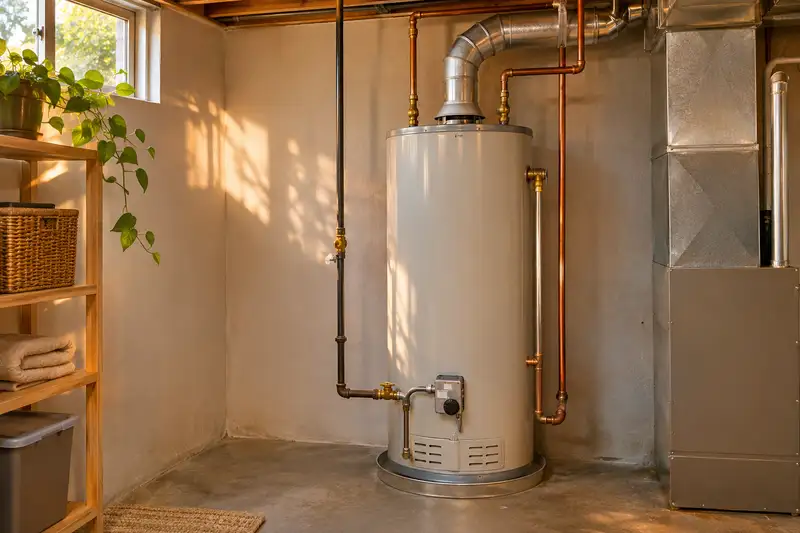
Start with the age of the tank
When you are deciding whether to repair or replace a water heater, or to book water heater repair, the first thing to check is how old it is. The label on the side of the tank usually shows the year it was made, or a serial number that includes the date.
Age alone does not settle whether to repair or replace a water heater, but it matters. Many tank water heaters last around eight to twelve years. A tank in the first half of that range with a single failed part is usually worth repairing. A tank near the end of that range with a serious problem often is not.
When to repair or replace a water heater
Usually replace
- Water leaking from the tank body itself
- Rust in the hot water from a tank near the end of its life
- A tank well past ten years old with a major failure
- Repeated repairs on the same heater within a short time
- A tank too small for the household that runs out every day
Usually repair
- A pilot that will not stay lit because of a worn thermocouple, a routine water heater repair
- A failed heating element or thermostat on an electric tank
- A dripping drain valve or relief valve
- A loose or worn connection on top of the tank
- Sediment that can be flushed out of a younger tank
A leak from the tank body cannot be repaired, because it means the steel inside has corroded through. Every other part on a water heater can usually be replaced.
Questions to ask yourself before deciding
A few honest answers make the decision clearer.
Is the hot water enough?
If the household often runs out of hot water, a repair will not change that. A larger tank or a different kind of heater might.
How often has it failed?
One repair in ten years is normal. Several in two years suggests the heater is wearing out.
Is the area around it at risk?
A tank in a finished basement or above living space can do much more damage if it fails, which can tip the balance toward replacing an older one.
Torn between a repair and a new tank?
Call and tell us the age of the tank and what it is doing. A licensed plumber in Missoula can come out and explain the options.
Common water heater problems and the usual answer
| Problem | Usual answer | Why |
|---|---|---|
| Pilot goes out | Repair | A thermocouple or flame sensor is a small part |
| No hot water on an electric tank | Repair | Elements and thermostats can be replaced |
| Popping noises | Flush, then decide | Sediment can often be cleared from a younger tank |
| Rusty hot water | Depends on age | A worn anode rod can be replaced, but rust from the tank itself means it is failing |
| Water under the tank | Find the source | Valves and fittings can be fixed, a leaking tank body cannot |
What a plumber looks at before recommending either
A plumber checks the tank for corrosion and leaks, tests the parts that commonly fail, looks at the venting on a gas heater and asks how the household uses hot water.
You hear what is wrong, what a repair involves and when replacement would be the better choice. The decision is yours, and nothing is done until you agree.
Making a repaired water heater last longer
A few habits help a tank you decide to keep stay reliable for more years.
- Have the tank flushed to remove sediment, especially if you hear popping
- Ask about checking the anode rod on an older tank
- Keep the temperature at a sensible setting rather than the highest
- Look for drips and rust around the base every few months
Signs a water heater is near the end of its life
Water heaters often give warning signs before they fail. Rust colored hot water, a metallic smell, rumbling that gets louder and moisture around the base of the tank all suggest the tank is wearing out.
A tank that needs the same repair twice within a year, or one that cannot keep up with the household even after a repair, is also telling you something. At that point, planning a replacement on your own schedule is usually better than waiting for a leak.
- Rusty or cloudy hot water
- Louder popping or rumbling noises
- Moisture or rust around the base of the tank
- Hot water running out faster than it used to
- The same part failing more than once
If you decide to replace it
Replacing a water heater is a good time to think about whether the old size still suits the household. A family that has grown, or a new bathroom, may need more hot water than the old tank could give.
The plumber can explain the options that fit your house, including tank size, gas or electric and where the new heater can go. As with any repair, you decide before any work starts.
Cold winters and water heater wear
In Missoula, a water heater works hardest in the coldest winter months, because the water arriving from the street is much colder than in summer. A tank that is starting to struggle often shows it first in January.
If an older heater keeps up through summer but runs short every winter, that is worth weighing when you decide whether to repair or replace it.
Details that help on a water heater call
These details help the plumber understand the problem before arriving.
- Whether the heater is gas or electric
- Its age, from the label on the tank if you can find it
- What it is doing, such as no hot water, noises, rust or a leak
- Whether you have closed the water valve or turned off the power or gas
- Where the heater is in the house
How the kind of problem changes the answer
Most water heater failures fall into two groups. The first is a single part giving out, perhaps the thermocouple, an element, a thermostat or one of the valves. These parts can be replaced, and once they are, the heater works as it did before.
The second is the tank itself wearing out. Corrosion eats through the steel from the inside over many years, and once water leaks from the body of the tank, nothing can seal it. That is the one problem where replacement is the only option.
Between the two sit problems such as heavy sediment or rusty water. On a younger tank, flushing or replacing the anode rod often helps. On an older one, the same signs usually mean the tank is wearing out.
Repair or replace questions
- How do I find out how old my water heater is?
- Can a leaking water heater be fixed?
- Is it worth repairing a ten year old water heater?
- Should I replace my water heater before it fails?
- Do water heaters wear out faster in cold climates?
- Is a water heater that makes noise about to fail?
- Can a plumber flush my water heater?
- What happens to the old water heater if I replace it?
How do I find out how old my water heater is?
Look at the label on the side of the tank. Many show the year of manufacture, and others include it in the serial number. A plumber can read it for you if it is unclear.
Can a leaking water heater be fixed?
That hinges on the source, which a leak detection visit can pin down. Drips at valves, fittings and connections can be fixed. A leak from the tank body means the tank has to be replaced.
Is it worth repairing a ten year old water heater?
For a small part such as a thermocouple or element, it can be. For a major problem or a tank showing rust, replacement usually makes more sense.
Should I replace my water heater before it fails?
Many people replace an older tank before it leaks, especially when it sits above a finished room. Signs like rusty water and repeated problems are good reasons to plan ahead.
Do water heaters wear out faster in cold climates?
They work harder in winter, because the incoming water is colder. Sediment buildup and how well the tank has been maintained usually matter more to how long it lasts.
Is a water heater that makes noise about to fail?
Not necessarily. Popping usually means sediment, which flushing can often clear on a younger tank. Loud rumbling on an old tank, along with rusty water or moisture at the base, is a stronger sign of wear.
Can a plumber flush my water heater?
Yes. Flushing drains sediment from the bottom of the tank, which can quiet popping noises and help a younger tank heat more evenly.
What happens to the old water heater if I replace it?
Ask the plumber when the replacement is planned. Old tanks are heavy and need to be drained and moved carefully.
Water heater help in Missoula
Call and describe what your water heater is doing. A licensed Missoula plumber can visit and explain your options.