Signs of a Hidden Water Leak
Water inside a wall or under a floor leaves small clues long before the damage is obvious.
Learn the signs to look forLicensed plumbers who work in Missoula
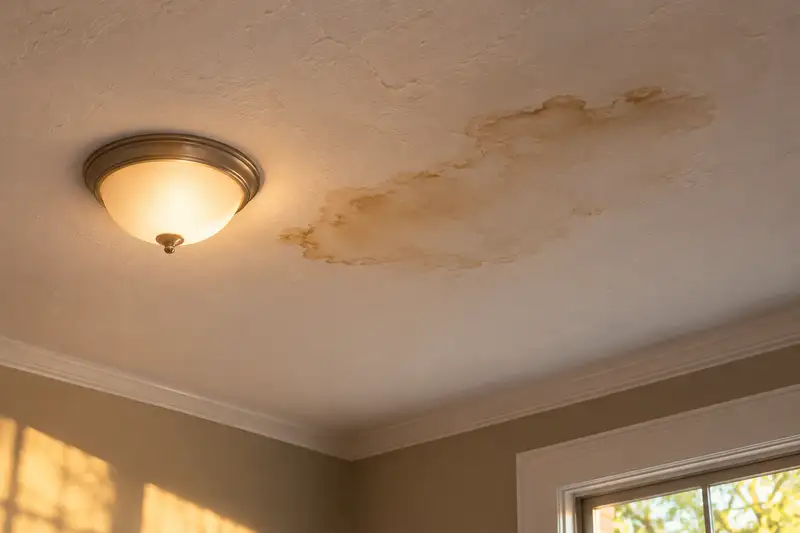
Why hidden leaks are easy to miss
The signs of a hidden water leak are often small, and leak detection is how a plumber confirms them. A pipe inside a wall can drip for weeks without any water reaching the floor, because the drywall, framing and insulation soak it up.
Once a stain shows or the floor gives a little underfoot, the leak may have been running for months. Learning the early signs helps you catch it while the repair is still small.
Signs of a hidden water leak you can see
Walk through the house and look closely at walls, ceilings and floors near bathrooms, the kitchen and the laundry.
- Yellow or brown stains on ceilings, often with a ring at the edge
- Paint that bubbles, peels or looks swollen
- Drywall that feels soft or crumbly when pressed
- Flooring that cups, buckles or lifts at the seams
- Dark spots or mold along baseboards and in corners
Signs you can smell and hear
An earthy, stale smell that lingers in a closet, a sink cabinet or one corner of a room often means damp materials nearby. The smell can show up before any stain does.
Listen when the house is quiet and nothing is running. A hiss, a drip or the sound of water moving inside a wall is a strong sign of a leak in a supply line.
- A musty or earthy smell in one area
- Running water sounds when every fixture is off
- A toilet that refills by itself
- Dripping inside a wall or ceiling
Confirm a leak with the water meter
The meter test is the most reliable way to confirm a hidden leak in the supply lines.
Turn off all water use
Make sure no faucet, toilet, appliance or irrigation system is running.
Read the meter
Note the reading or watch the small leak indicator on the dial.
Wait thirty minutes
Do not use any water during this time.
Read it again
Any change means water is escaping somewhere. Close the main valve and repeat the test to learn whether the leak sits indoors or out in the buried line.
Meter moving with everything off?
Call and tell us what you found. A licensed plumber in Missoula can come out to trace the leak.
Where leaks hide and the clue each one leaves
| Source | Where to look | Typical clue |
|---|---|---|
| Toilet flapper or fill valve | Inside the tank | Tank refills by itself, water ripples in the bowl |
| Toilet wax seal | Around the base and ceiling below | Stain or soft floor around the toilet |
| Shower valve or tub drain | Wall behind the shower, ceiling below | Stain below the bathroom, loose tile |
| Sink supply lines | Cabinet under the sink | Damp cabinet floor, warped base |
| Washing machine hoses | Behind the washer | Damp wall or floor behind the machine |
| Pipes in outside walls | Walls near sinks after a freeze | New stain or bubbling paint after a thaw |
Hidden leaks after a Missoula winter
In late winter and early spring, many hidden leaks come from pipes that cracked during a freeze. They stay quiet while frozen and start to drip once the weather warms and water flows normally again.
After a long cold spell ends, check walls and ceilings near sinks on outside walls and around outside faucets. Watch the meter for a few days.
What happens if a hidden leak is left alone
A slow leak keeps wood framing and drywall damp. Over weeks and months that leads to mold, rot, stained ceilings and floors that have to be replaced. The repair to the pipe is often small compared with the repair to the house.
Leaks also waste water every hour. Finding one early protects the house and stops the meter from running for nothing.
Leaks you can check for in ten minutes
You do not need tools to check the most common sources of a hidden leak. Empty the cabinets under each sink and look at the pipes and the cabinet floor with a flashlight. Feel the supply lines for dampness.
Look behind each toilet at the supply line and the valve. Check the base of the toilet for discoloration in the floor. Look behind the washing machine at the hoses, and around the base of the water heater.
Finally, check the ceilings under each bathroom and the laundry, and the foundation wall at the spot the supply pipe enters. Write down anything you find so you can describe it when you call.
Leaks in the drain lines
Not every hidden leak is in a supply line. Drain pipes leak only when water is running through them, so the signs come and go.
A stain under a bathroom that grows after showers, or a smell of sewage in one spot, points to a leaking drain, trap or shower pan rather than a supply line. The meter test will not show these, because the water is draining away, not being drawn in.
- Stains that grow after a shower or bath
- Loose or cracked tile around a tub or shower
- Damp spots under a sink only after it has been used
- A sewer smell near a wall or floor
What to do once you find signs of a leak
If water is actively dripping, close the valve for that fixture or the main valve. Move belongings away from the wet area and put a container under any drip.
Mark the edge of a stain with a pencil and note the date. If it grows, the leak is active. Then call and describe what you found, and a plumber can confirm the source and repair it.
Rooms to check first
Most hidden leaks start in rooms where water is used every day.
- Bathrooms, especially around toilets, tubs and shower walls
- The kitchen, under the sink and behind the dishwasher and fridge
- The laundry area, behind the washer and around the utility sink
- The basement near the water heater and where the water line enters
- Rooms with sinks on outside walls after a cold snap
Hidden leak questions
- What is the most common hidden leak in a house?
- Can a hidden leak cause mold?
- How do I find a leak behind a wall?
- Is a small ceiling stain worth worrying about?
- Can a hidden leak make my house smell musty?
- Will the meter test find every leak?
- Can a dishwasher or fridge cause a hidden leak?
- How fast can a hidden leak cause damage?
- Should I open the wall myself to look for a leak?
- What does a leak sound like inside a wall?
What is the most common hidden leak in a house?
It is usually a toilet with a worn flapper. It lets water run from the tank into the bowl around the clock, often without any sound you would notice.
Can a hidden leak cause mold?
Yes. Damp drywall, insulation and wood are ideal for mold, which can start within a few days of a material staying wet.
How do I find a leak behind a wall?
Look for stains, bubbling paint and soft spots, listen for running water and use the meter test. A plumber can then pinpoint the spot with listening equipment and moisture meters.
Is a small ceiling stain worth worrying about?
Yes, if it is new or growing. Mark its edge with a pencil and check it again in a few days. If it spreads, the leak is active.
Can a hidden leak make my house smell musty?
Yes. A musty smell in one area that does not go away is often the first sign of damp materials behind a wall, under a floor or inside a cabinet.
Will the meter test find every leak?
It finds leaks in the supply lines, which are under pressure all the time. Leaks in drain lines only happen when water is draining, so look for stains and smells after using the fixture instead.
Can a dishwasher or fridge cause a hidden leak?
Yes. The supply line to a dishwasher or a fridge with an ice maker can leak behind the appliance, where you rarely look. Check the floor and the wall behind them now and then.
How fast can a hidden leak cause damage?
A slow drip can take weeks or months to cause visible damage, but materials that stay wet for a few days can start to grow mold. A larger leak inside a wall can damage drywall and flooring much faster.
Should I open the wall myself to look for a leak?
It is better not to, and leak detection avoids it. Opening the wrong spot adds repair work. A plumber can narrow the location first so only a small opening is needed.
What does a leak sound like inside a wall?
A steady hiss, a faint trickle or a drip that you hear when the house is quiet and no water is being used. Listen near bathrooms, the kitchen and the laundry.
Hidden leak help in Missoula
If you have found signs of a leak, call. One of the licensed plumbers working in Missoula can head over to find and repair it.